
Business Continuity Management
The Importance of Business Continuity Management
In today’s fast-paced and unpredictable business environment, organizations face numerous risks that can disrupt their operations. Natural disasters, cyber-attacks, and other unforeseen events can lead to significant financial losses and damage to reputation. Therefore, effective management is essential to safeguard the organization’s assets and ensure ongoing operations.
ISO 22301, the world’s first international standard for management (BCM), has been developed to help organizations minimize the risk of such disruptions. Launched in 2012, ISO 22301 provides a comprehensive framework for establishing, implementing, maintaining, and continually improving a Management System (BCMS). This standard has replaced the previous British standard BS25999, marking a significant evolution in practices.
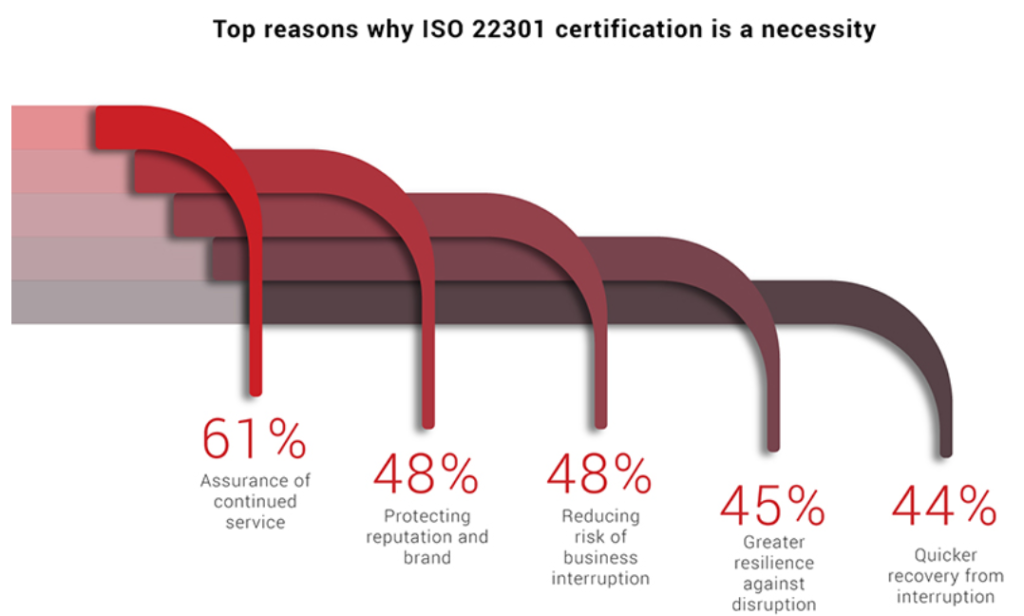
Effective business continuity management is essential for organizations to thrive in challenging environments.
Businesses that implement robust business continuity management strategies are better equipped to handle unforeseen events.
ISO 22301 outlines requirements for organizations to plan, establish, implement, operate, monitor, review, maintain, and continually improve a documented management system. This system prepares organizations to respond to and recover from disruptive events effectively. The requirements specified in ISO 22301 are generic, making them applicable to all organizations regardless of type, size, and nature. The extent of application depends on the organization’s operating environment and complexity. For example, a small business’s approach to BCM may differ significantly from that of a multinational corporation due to resource availability, regulatory requirements, and operational scale.
Benefits of Implementing ISO 22301
Implementing ISO 22301 offers numerous benefits, including improved risk management, enhanced operational efficiency, and increased customer satisfaction. Organizations can better prepare for disruptions through systematic planning and resource allocation. Moreover, achieving certification can provide a competitive advantage by demonstrating commitment to resilience and quality management.
- Greater emphasis on setting the objectives, monitoring performance and metrics;
- Clearer expectations on management;
- More careful planning for and preparing the resources needed for ensuring business continuity.
With effective business continuity management, organizations can reduce risks and enhance their operational resilience.
Real-World Applications of ISO 22301
Organizations implementing ISO 22301 have seen enhanced resilience and improved stakeholder confidence. For instance, a financial institution that adopted ISO 22301 was able to maintain uninterrupted services during a regional power outage, thereby preserving customer trust and safeguarding its reputation. Furthermore, numerous sectors, including healthcare, education, and manufacturing, can benefit from BCM practices that align with ISO 22301, ensuring that they are prepared for any eventuality.
Key Components of Management
Management encompasses several key components, including risk assessment, business impact analysis, strategy development, and training. Risk assessments identify potential threats to the organization, while business impact analyses help prioritize critical functions that must be maintained during a disruption. This structured approach ensures that organizations can allocate the necessary resources effectively.
ISO 22301 applies to all types and sizes of organizations that wish to:
By focusing on business continuity management, organizations can ensure they are prepared for any crisis.
The key components of effective business continuity management include risk assessment and strategy development.
Understanding the principles of business continuity management is vital for organizational success.
- Establish, implement, maintain and improve a BCMS;
- Assure conformity with the organization’s stated business continuity policy;
- Demonstrate conformity to others;
- Seek certification/registration of its BCMS by an accredited third party certification body; or
- Make a self-determination and self-declaration of conformity with this International Standard.
For more information regarding training & consulting with the help of our experts please contact us. Through comprehensive support, organizations can ensure that their business continuity management practices not only comply with ISO 22301 but also enhance their overall operational resilience.
Training and Support for Management
For more information regarding training & consulting with the help of our experts please contact us. Our team can assist organizations in understanding the nuances of ISO 22301 and guide them through the certification process. Additionally, we offer workshops and seminars to equip teams with the knowledge and skills necessary for effective management.
Future of Management
As the landscape of risks continues to evolve, the future of management will likely incorporate advanced technologies such as artificial intelligence and data analytics. These tools can enhance predictive capabilities, allowing organizations to anticipate disruptions and respond more effectively. Furthermore, ongoing training and awareness will remain critical in fostering a culture of resilience across all organizational levels.
Our experts emphasize the importance of business continuity management in every aspect of planning.
Training in business continuity management is crucial for teams to effectively respond to crises.
Investing in business continuity management will pay off by protecting assets and ensuring operational continuity.